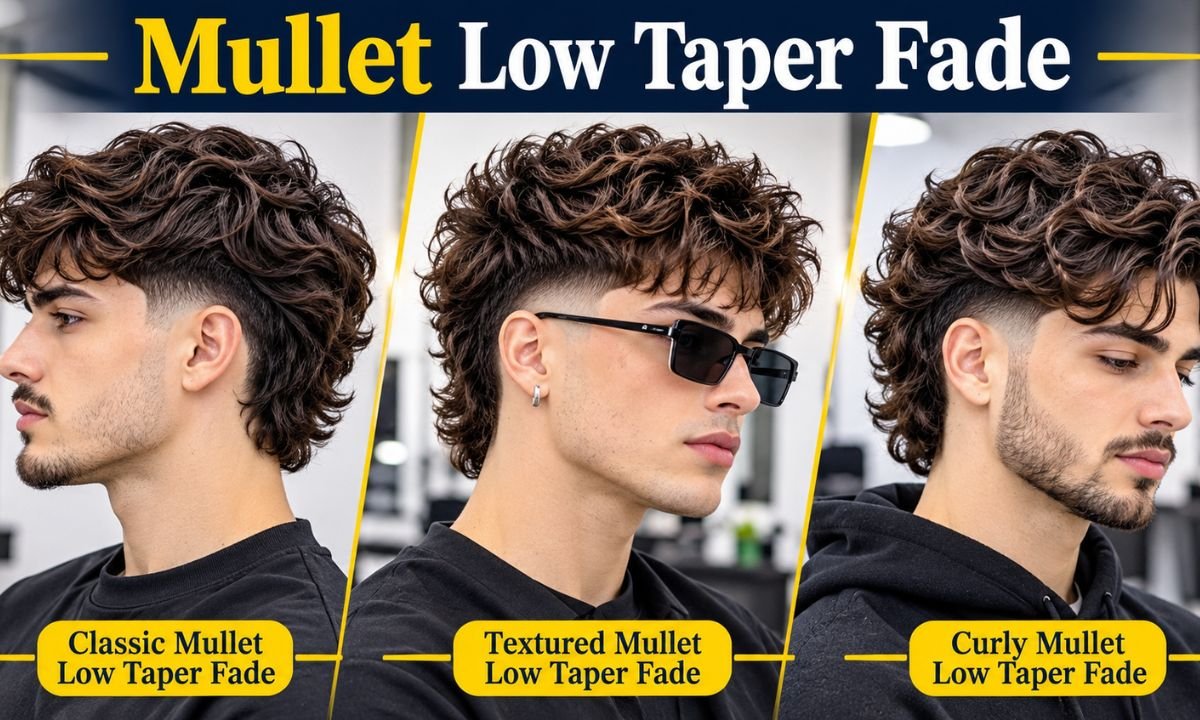
Wondering what a mullet low taper fade actually looks like on a normal guy? It’s a mullet with a clean, gradual taper around your ears and neck. The top stays short to medium, the back keeps its length, and the edges look sharp instead of shaggy. Think relaxed hair with tidy borders, and a cut you can wear to work or a Saturday gig.
Maybe you worry it’ll look like a throwback, or that your hair type won’t cooperate. Fair concerns. This guide covers 26 modern styles, face shape matches, hair type advice, products, and upkeep. You’ll also get exact words to say to your barber, so you don’t leave with a surprise. Stick around, drop your questions in the comments, and share the post with the friend who keeps saying he’d never get a mullet.
What Is a Mullet Low Taper Fade?
A mullet low taper fade mixes two ideas. The mullet part means shorter hair on top and sides with noticeably longer hair at the back. The low taper fade part means hair around your ears and nape gets shorter in small steps.
“Low” is the key word. The taper starts just above the ear and curves toward the tapered neckline, so it frames your head without cutting high into the sides. Most barbers leave a little length at the shortest point.
That’s the big difference from a skin fade. You get a soft edge, not a bald contrast. If you want a mullet fade haircut that looks planned, this is the safest route.
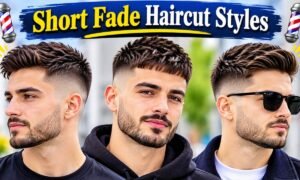
Don’t Miss: 21 Trendy Short Fade Haircut Styles & Ideas for Men in 2026
What Is a Low Taper Fade Modern Mullet?
A modern mullet is the cleaned-up cousin of the old one. It has more layers, more movement, and far less contrast between sections. Nobody’s going to mistake it for a school photo from 1986.
Add a low taper haircut to the sides and you fix the parts that used to look messy. Sideburns, ears and neck all get neat lines. The modern mullet haircut then reads as a style choice, not a grow-out accident.
The top usually carries texture or a loose fringe. The back stays long enough to notice, but not so long it fights you every morning. Relaxed feel, precise structure.
Why Is the Mullet Low Taper Fade Trending in 2026?
Men’s hair has been drifting toward length and texture for years. Super short, severe cuts are no longer the only “clean” look. Men’s modern hairstyles now lean softer, and the mullet fits right in.
It also photographs well. The longer back adds personality, while the taper keeps the outline crisp on camera and in real life. Barbers like it too, because it flexes across hair types.
Here’s the practical part. You can wear it messy on Friday and slicked back on Monday. That range is why it hasn’t burned out like most quick trends.
Low Taper Fade vs. Traditional Mullet
The traditional mullet follows the old “business in front, party in back” rule. Short, fairly even top and sides, with a long, often untouched back. Retro and bold.
A mullet low taper fade changes the sides, neck and top. Here’s a quick side-by-side:
| Feature | Traditional Mullet | Mullet Low Taper Fade |
| Sides | Short, little blending | Gradually tapered around ears |
| Neckline | Natural or uneven | Tapered and defined |
| Top | Flat or feathered | Layered and textured |
| Overall feel | Retro and bold | Polished and modern |
Want a throwback? Go traditional. Want something that fits daily life and grows out gracefully? Pick the taper version.
Quick Picker: Which Style Should You Choose?
Scrolling through 26 options can feel like a buffet with no menu. So start with your hair type, then your lifestyle. Wavy or thick hair has the most freedom, while straight or fine hair does better with shorter lengths and layers.
Office job? Look at styles 8, 12, 14 and 23. Love a casual vibe? Styles 2, 3, 6 and 25 fit. Nervous about commitment? Start with style 8, the short mullet haircut.
Not sure at all? Bring three reference photos to your barber and say what you like in each one. That beats any description.
26 Best Mullet Low Taper Fade Hairstyles for Men in 2026
Every style below is a different shape, a different hair match, or a different setting. Use them as starting points, not exact templates. Your hair texture and face matter more than any photo.
Each entry includes a line you can read out to your barber. That’s the fastest way to avoid a miscommunication.
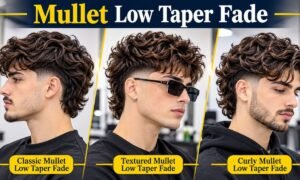
1. Classic Mullet Low Taper Fade
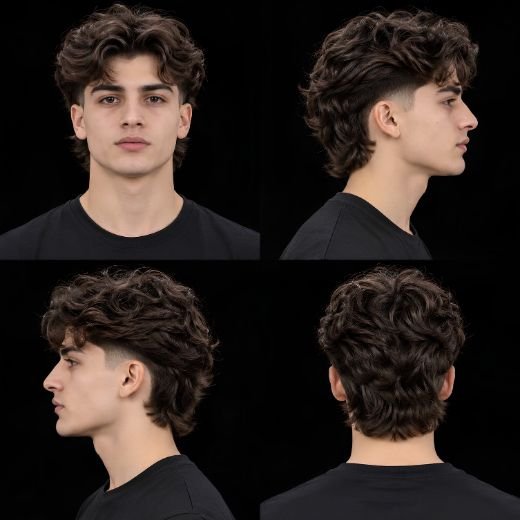
This is the base model. Short to medium top, a clean low taper around the ears and nape, and a back that sits near the collar. It’s the classic mullet hairstyle, updated.
It suits most face shapes and works best on straight to slightly wavy hair. Ask for: “low taper, short top with some length at the crown, back at the collar.”
2. Textured Modern Mullet with Low Taper Fade
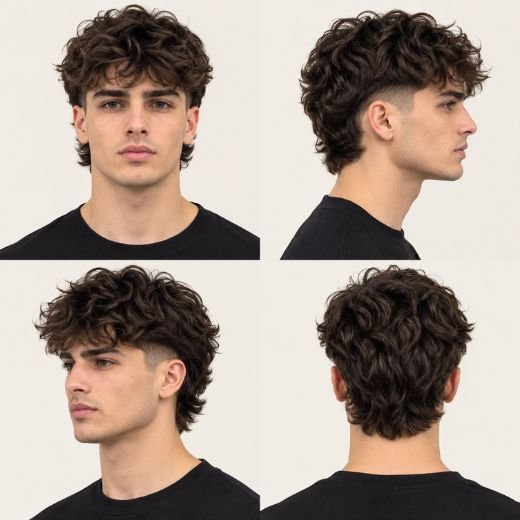
Here the top gets choppy layers or point cutting for a lived-in look. The taper stays tidy, so the textured modern mullet looks soft but not sloppy. Good for guys who like casual.
Work a little matte clay through dry hair for definition. Tell your barber: “lots of texture on top, low taper, layered back.”
3. Messy Mullet Low Taper Fade
This messy mullet haircut leans into the undone look. Layers are uneven on purpose, and you style it with your fingers instead of a comb. The taper keeps it from looking neglected.
It loves wavy or thick hair with natural movement. Use sea salt spray, then let it air dry. Say: “relaxed, not perfect.”
4. Curly Mullet Low Taper Fade
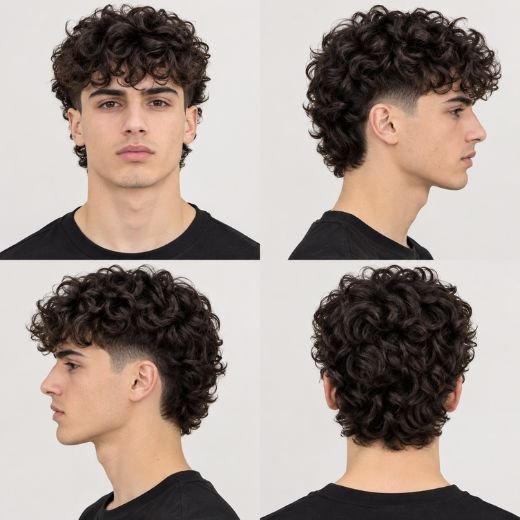
Curls and mullets get along well. The curly mullet hairstyle gives you volume on top and shape at the back, while the taper adds structure around ears and neck.
Ask your barber to cut curls dry or damp so they see the real pattern. Keep sides tapered but not razor tight, and skip heavy thinning, which can cause frizz.
5. Straight Hair Mullet Low Taper Fade
Straight hair shows every line, so precision matters. A straight hair mullet can look sleek when the taper blends cleanly into the longer back.
Without layers it can turn helmet-shaped. Ask for subtle layers on top and a slightly textured back. A light texture spray adds grip.
6. Wavy Mullet Low Taper Fade
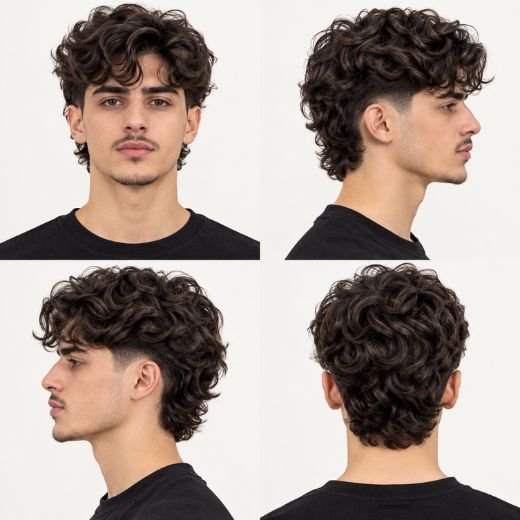
Wavy hair might be the easiest canvas here. The natural bend adds lift on top and gives the back a soft flow. A wavy mullet haircut nearly styles itself.
Keep it layered so waves stack instead of puffing out. Say: “low taper, layers that follow my wave.” A little cream helps the pattern.
7. Blonde Mullet Low Taper Fade
Lighter hair makes the mullet shape pop. A blonde mullet against a clean taper is a bold look, and it works with many skin tones.
Bleached hair is more fragile, so condition often and trim on time. Tell your barber about your color history before they cut.
8. Short Mullet Low Taper Fade
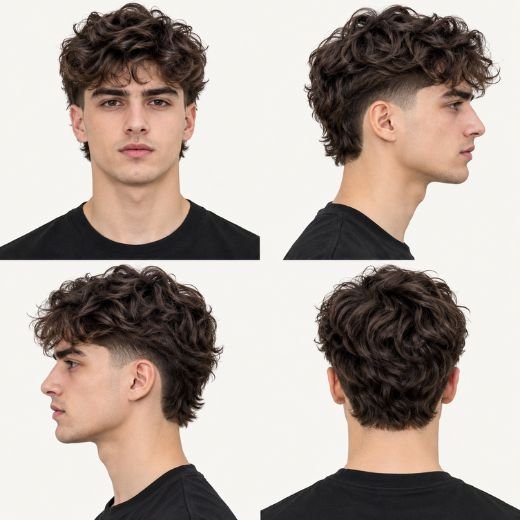
Nervous? Start here. The back sits just past the nape and the top stays compact, so the short mullet haircut reads subtle and modern.
It’s low effort and fine for most workplaces. Ask for: “taper, short textured top, back only slightly longer than the sides.”
9. Long Mullet Low Taper Fade
This is the statement piece. The back reaches the shoulders or beyond, while sides and neck stay neat. A long mullet hairstyle lives on that contrast.
It needs more care, especially with dry or fine hair. Expect regular conditioning and a few rough mornings. Ask your barber to keep the weight at the back.
10. Burst Fade Mullet with Low Taper
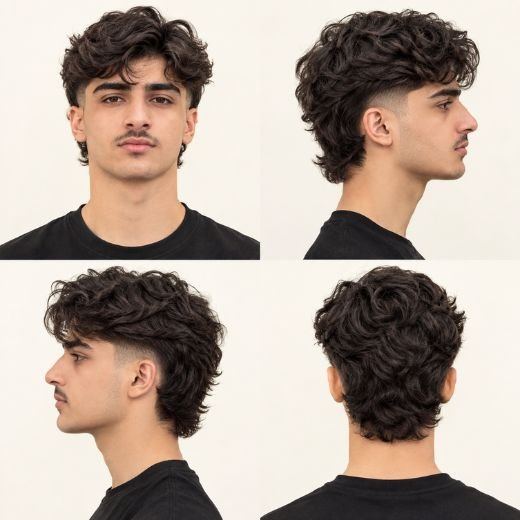
A burst fade curves around the ear in a semicircle and leaves length behind it. With a mullet, the burst fade mullet frames the ear sharply while the back stays long.
It looks best on thicker hair, often with a short beard. Be specific about where the burst starts and ends. One inch of difference changes the whole shape.
11. Mullet Low Taper Fade with Textured Fringe
The front hair gets the attention here. A textured fringe haircut falls across the forehead in a natural, choppy way. It softens strong foreheads.
It works well on round and square faces. Say: “choppy, textured fringe, clean taper on the sides.”
12. Mullet Low Taper Fade with Side Part
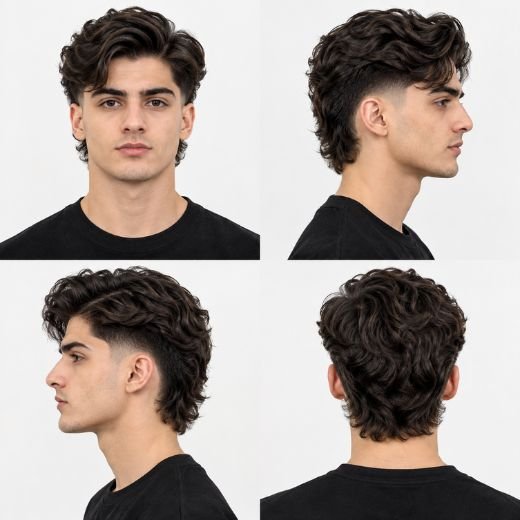
A side part adds structure. The top sweeps to one side, which gives the cut a neat, slightly classic feel without losing the mullet shape.
It suits straight or lightly wavy hair and office settings. Use a light pomade and comb. Ask your barber to cut the part where your hair already falls.
13. Mullet Low Taper Fade with Middle Part
The middle part creates a curtain look, popular with wavy hair. The hair frames your face and flows toward the longer back.
It fits oval and oblong faces best. Ask for longer layers in front so the curtains fall evenly.
14. Slick Back Mullet Low Taper Fade
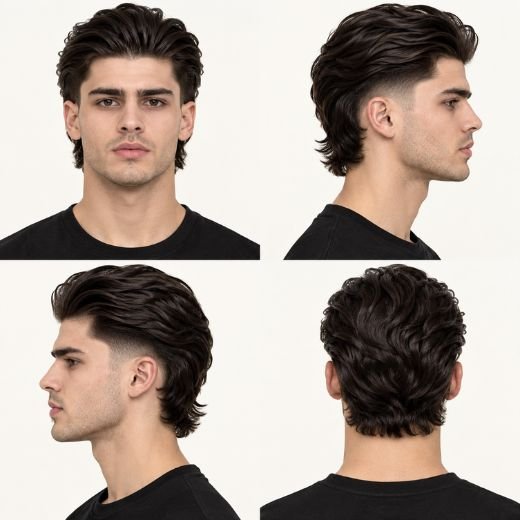
The top gets brushed back and the length at the back flows into it. A slick back mullet with a tight taper looks polished on purpose.
Use a medium-hold pomade or light wax. It works on thick, straight or wavy hair, and it’s a solid pick for formal events.
15. Fluffy Mullet Low Taper Fade
Soft, airy, full of lift. The layers create volume, and the taper keeps the outline neat so the fluffy mullet haircut doesn’t look wild.
It’s great for fine or thin hair because it adds body. Blow-dry with a round brush. Ask for layers, not heavy thinning.
16. Layered Mullet Low Taper Fade
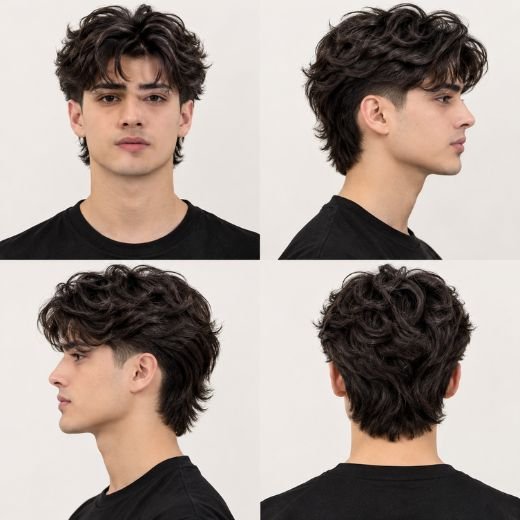
Layers are the star. Multiple lengths run from crown to back, using hair layering techniques that create movement and a soft hand-off into the taper.
It suits nearly every hair type, especially thick hair that needs weight removed. Tell your barber to layer both top and back so the shape stays even.
17. Korean Mullet Low Taper Fade
The Korean mullet haircut is soft and light. It often has a gently curled top with a see-through fringe, tapered sides, and a shorter, more controlled back.
It suits straight, slightly thick hair, often with a soft perm or blow-dry. Ask for light, airy styling with movement at the front.
18. Asian Mullet Low Taper Fade
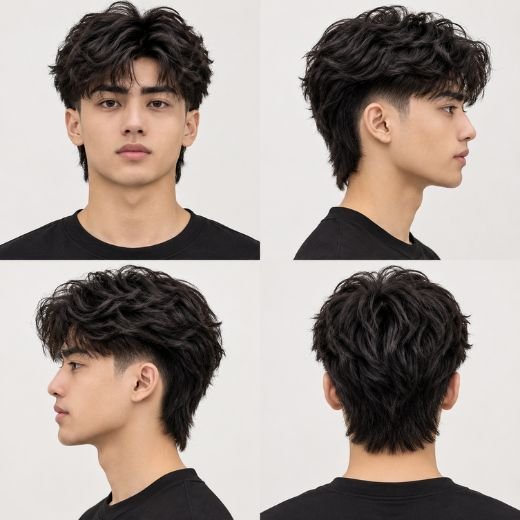
Many guys with straight, dense hair pick the Asian mullet hairstyle for its natural shape. It relies on texture and smart layering to avoid heaviness.
Ask your barber to remove weight with texturizing and keep the taper clean. A matte product keeps the shape without looking greasy.
19. Mullet Low Taper Fade with Beard
A beard and a mullet balance each other. The back adds length, and a tapered beard that blends into the sideburns keeps everything connected.
Ask for the beard to fade into the taper. A neat, medium-length beard suits most face shapes and softens a strong jaw.
20. Mullet Low Taper Fade for Thick Hair
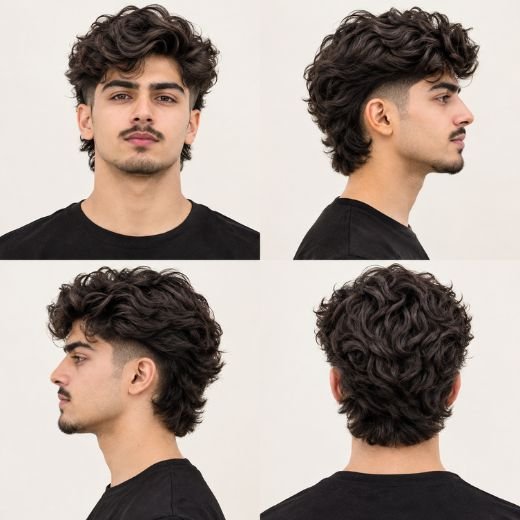
Thick hair can feel bulky without a plan. With internal layering, a mullet low taper fade for thick hair looks full and dynamic instead of heavy.
Ask for texturizing plus a clean taper. Use lighter products so your hair doesn’t get weighed down by the end of the day.
21. Mullet Low Taper Fade for Thin Hair
Thin hair can carry a mullet. The trick is keeping it compact, with soft layers that create the look of volume.
Skip very long backs, which can look stringy. Say: “short, textured mullet, clean low taper.” Texture powder and a blow-dry add lift.
22. Teen Boy Mullet Low Taper Fade
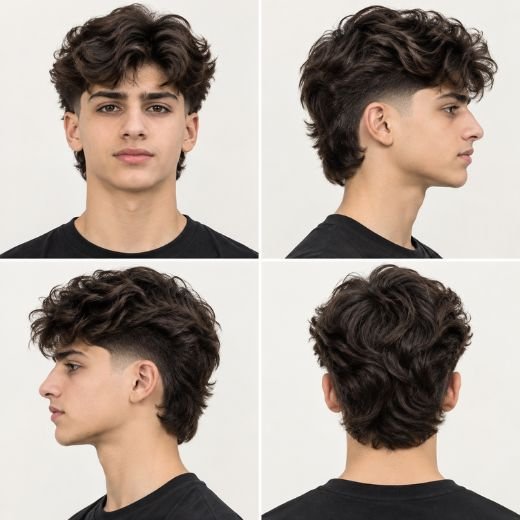
For teens, easy styling and neatness come first. A short mullet with a low taper looks current and usually fits school rules.
Check the dress code before you book. Then ask for: “short mullet, clean taper, back just past the collar.” Keep the top easy to manage.
23. Professional Mullet Low Taper Fade
Yes, you can wear one at work. A professional mullet haircut keeps the back short, the top neat, and the taper subtle.
Pair it with a side part or slicked-back top for a formal feel. Ask for a conservative back length and a low, clean taper.
24. Mullet Low Taper Fade with Hair Design
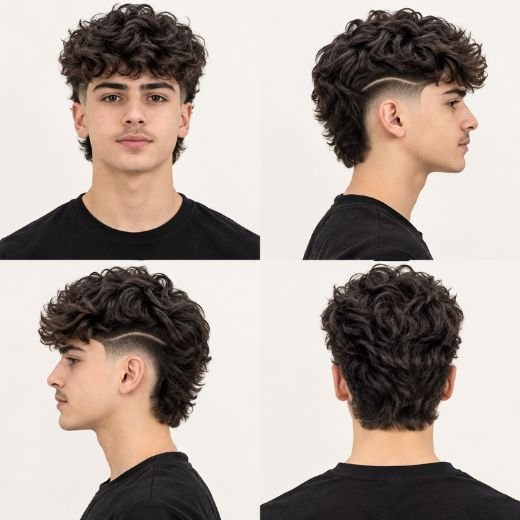
A small line or shape cut into the taper area adds personality. The low fade gives you a clean canvas for sharp detail.
Keep the design simple so it doesn’t fight the mullet. Only book this with a barber who does line work, and bring a reference photo.
25. Wolf Cut Mullet with Low Taper Fade
This hybrid blends heavy wolf cut layers with the mullet shape. The wolf cut mullet is shaggy and full of movement, while the taper keeps the edges clean.
It works best on thick or wavy hair. Say: “wolf cut layers, mullet back, low taper.” Expect lots of layering.
26. Spiky Mullet Low Taper Fade
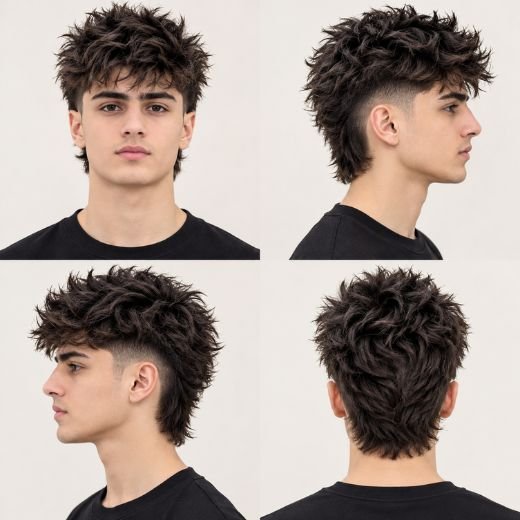
Spiky texture brings energy. The top goes upward with clay or paste, while the long back adds contrast. The spiky mullet haircut is confident, so style it with intent.
It suits thicker, straighter hair that holds shape. Ask for a short, choppy top so the spikes look sharp, not stiff.
How to Ask Your Barber for a Mullet Low Taper Fade
Photos beat words, every time. But a few barber haircut instructions make sure you and your barber are on the same page. Try: “Mullet with a low taper fade, shorter on top and sides, length kept at the back.”
Then add details about length, texture and neckline. Mention how you style your hair daily. A barber who knows you air dry will cut differently than one who knows you blow-dry.
If something feels off during the cut, speak up early. Fixing a taper mid-cut is easy. Fixing it afterward means waiting weeks.
What Clipper Guard Number Should You Choose?
Many barbers start around a #1 guard or #2 guard at the shortest point, then blend into a #3 guard or #4 guard before switching to scissors. Tapers are gentler than skin fades, so you don’t need to go to zero.
Numbers vary by clipper brand, so treat them as a starting point. Tell your barber how short the shortest point should look, and let them adjust.
How Short Should the Sides and Neckline Be?
Short enough to look neat, long enough to blend into the top. A low taper only touches the area around the ears and nape, so the upper sides keep more length.
For the neck, you can pick natural, tapered or squared. A tapered neckline blends best with a mullet and grows out more gracefully.
How Long Should the Top and Back Be?
The top usually runs 2 to 4 inches, depending on hair type and how much volume you want. The back ranges from collar length for subtle to shoulder length for bold.
When in doubt, go shorter first. You can always grow it out later, but you can’t glue it back on.
What Should You Tell Your Barber About the Fringe?
Fringe changes the whole mood. Say whether you want it short and choppy, long and swept, or parted. Mention if you often push your hair back.
Also point out cowlicks and hairline quirks. A good barber works with them instead of fighting them.
Barber Lingo in Plain Words
A few terms come up a lot, and nobody explains them. Taper means the hair gets shorter gradually. Blend means no visible line between lengths. Weight line is the spot where hair looks heaviest.
Point cutting means snipping into the ends for a choppy look. Texturizing removes bulk. Knowing these terms helps you ask for exactly what you picture.
Best Face Shapes for a Mullet Low Taper Fade
This cut works across the board, but small tweaks make it more flattering. Use face shape hairstyles as a guide, not a rulebook. Your hairline and hair density matter too.
If you’re unsure of your shape, take a front-facing photo with your hair pulled back. Compare your forehead, cheekbones and jaw widths.
Mullet Low Taper Fade for Oval Faces
Oval faces are balanced, so almost any version works. Play with fringe length, part style and back length without worrying much about proportions.
This is the easiest shape to experiment on. If you’ve been curious about the long version, you’ve got room to try it.
Mullet Low Taper Fade for Round Faces
Round faces do well with height on top and tight tapered sides. Both create length. A textured fringe or side part also helps avoid emphasizing width.
Skip very fluffy sides. They add width exactly where you don’t want it.
Mullet Low Taper Fade for Square Faces
Square faces already have strong angles. Softer layers and a textured fringe balance the jaw. A slightly longer back adds flow so the shape doesn’t look boxy.
Avoid a super blunt back. It repeats the same hard lines.
Mullet Low Taper Fade for Diamond Faces
Diamond faces are widest at the cheekbones. A fringe that covers part of the forehead and some volume on the sides of the top helps balance things.
Keep the taper clean so the cheekbones stay the focus.
Mullet Low Taper Fade for Heart-Shaped Faces
Heart-shaped faces have a wider forehead and a narrower chin. A side-swept fringe and some fullness at the back respond well.
Avoid heavy volume at the very top. It makes the forehead look even wider.
Mullet Low Taper Fade for Oblong Faces
Oblong faces look long, so aim to shorten the look. A fuller fringe, a middle or side part, and a shorter back all help.
Avoid too much height on top. It stretches the face further.
Best Hair Types for a Mullet Low Taper Fade
Your natural hair texture decides how this cut sits. Work with it and styling takes minutes. Fight it and you’ll waste a lot of product.
Here’s how each type behaves, plus what to ask for.
Straight Hair
Straight hair gives a sleek, defined shape but can look flat. Ask for layers on top and a lightly textured back. A texture spray adds grip.
Heavy pomade can make it look stringy. Keep products light.
Wavy Hair
Wavy hair is the sweet spot. It builds volume and movement without much effort, so mornings stay quick.
Keep layers in so the waves stack. A touch of cream or sea salt spray does the rest.
Curly Hair
Curly hair brings personality and bounce. Keep layers soft and avoid over-thinning, which leads to frizz.
Cut it when it’s dry or damp, so your barber sees the curl pattern. Don’t brush it once dry.
Thick Hair
Thick hair needs weight removed. Internal layering and texturizing keep the mullet from feeling like a helmet.
Lighter products work best. A heavy wax can make dense hair sit flat and greasy.
Thin and Fine Hair
Thin hair and fine hair look best shorter and more compact. Soft layers create body, and a little texture powder adds lift.
Avoid very long backs. They can look sparse at the ends.
Coarse Hair
Coarse hair holds shape well but can feel stiff. Moisturizing products soften the movement.
Ask for layers so the back doesn’t stand out like a broom.
Pros and Cons of a Mullet Low Taper Fade
Every haircut is a trade-off. Here’s the honest version, so you know what you’re signing up for.
Benefits of the Mullet Low Taper Fade
- It looks modern and intentional, not messy.
- It fits many hair types and face shapes.
- You can dress it up or down.
- The low taper keeps ears and neckline tidy.
- It grows out reasonably well since the taper is subtle.
Disadvantages of the Mullet Low Taper Fade
- It needs regular trims to keep the taper sharp.
- The back can feel warm in hot or humid weather.
- Strict dress codes may need adjustments.
- Very fine hair may need extra styling effort.
Who Should Think Twice Before Getting This Cut?
If your hairline is receding at the temples, a tight taper can highlight it. Ask your barber to keep the sides a bit longer. Same goes for strong cowlicks at the nape, which can make the back flip in odd directions.
Also consider your daily routine. If you want a wash-and-go cut with zero effort, a mullet needs a little more attention than a buzz cut. A short version fixes most of this.
How to Style a Mullet Low Taper Fade
Good news: styling takes less time than you’d think. A few habits make a big difference, and most of them cost nothing. You don’t need ten products or a salon routine.
Start simple, then add steps as you learn what your hair likes.
Simple Everyday Styling Steps
- Wash with a gentle shampoo and condition the ends, especially the back.
- Towel dry so hair is damp, not dripping.
- Work in a small amount of cream or sea salt spray.
- Blow-dry the top for lift, then let the back air dry.
- Finish with a dab of clay or wax through your fingers.
How to Add Volume and Texture
Blow-dry the top up and back using your fingers or a vent brush. Add a pinch of texture powder at the roots for lift. This is where hair texture and volume really get a boost.
For extra grit, mist sea salt spray through the mid-lengths and scrunch lightly. Stop when it looks good. Overworking it makes it stiff.
How to Style a Curly or Wavy Mullet
Apply curl cream to damp hair and scrunch upward. Let it dry naturally or use a diffuser. Both methods protect the pattern.
Don’t brush once it’s dry, because that breaks up the curls. Refresh in the morning with a light water mist.
Best Products for Styling a Mullet Low Taper Fade
The right hair styling products depend on your hair type and the finish you want. Start with one product and learn how it behaves. Adding more later is easy.
Here’s what each one does best.
Matte Clay
Matte clay gives strong hold with a dry, natural finish. It’s great for textured and messy styles, and for thick hair.
Warm a pea-sized amount between your palms first. Then work it in from the back to the front.
Texture Powder
Texture powder adds lift and grip, especially for fine or thin hair. A tiny pinch goes a long way.
Sprinkle it at the roots and massage lightly. It also helps a day-two style that went flat.
Sea Salt Spray
Sea salt spray creates beachy texture and works well on waves. Use it on damp hair for the best effect.
Too much can dry out your hair. If it feels crunchy, follow up with a leave-in conditioner.
Hair Wax
Hair wax gives flexible hold with a slight sheen. It’s handy for shaping the fringe and defining pieces at the back.
It can build up over time. Wash it out fully every few days.
Pomade
Pomade gives a sleek finish and suits slick-back or side-part mullets. A water-based version washes out more easily.
Use a comb to spread it evenly. That avoids greasy clumps.
Styling Cream
Styling cream adds softness and light control. It’s ideal for curls, waves and anyone who wants a natural look without stiffness.
It’s also a good first product if you’re new to styling. Hard to overdo.
How to Maintain a Mullet Low Taper Fade
Maintenance is what keeps this cut modern instead of overgrown. Good mullet haircut maintenance isn’t complicated. It’s mostly about timing and the back section.
Think of it like a car. A small, regular tune-up beats a big repair later.
How Often Should You Get a Trim?
Most men do well with a trim every 3 to 5 weeks. The taper loses sharpness first, so go for the short end of that range if you like it crisp. A good hair trimming schedule also saves money over big fixes.
Prefer a softer, grown-in look? You can stretch it a bit. Book a quick neckline cleanup between full visits if your barber offers it.
How to Maintain the Longer Hair at the Back
Trim the ends every couple of months to prevent split ends. Condition often and detangle from the ends upward. A leave-in conditioner helps with dryness.
Don’t tie it tight when it’s wet. Wet hair stretches and breaks easily.
How to Prevent Frizz and Dryness
Avoid very hot water and use a moisturizing shampoo. Pat your hair dry instead of rubbing it with a towel.
Add a little leave-in product or oil to the ends. A silk or satin pillowcase also cuts friction while you sleep.
How to Keep Your Low Taper Fade Fresh
Between visits, tidy the neckline at home with a trimmer if you feel confident. Or book quick cleanups. The area around your ears is where regrowth shows first.
Go slowly with a trimmer. Small, careful passes are safer than one big pass. Part of good men’s grooming is knowing when to stop.
How Long Does It Take to Grow a Mullet Low Taper Fade?
Hair grows about half an inch per month for most people. So moving from a short crop to a collar-length back usually takes a few months. Shoulder length takes much longer, often a year or more.
Use the “awkward phase” wisely. Ask your barber to keep the taper clean while the back grows. A clean taper makes the in-between stage look intentional.
Low Fade Mullet vs. Low Taper Fade Mullet
People mix these up all the time. A low fade usually goes shorter, sometimes to the skin, and creates a visible contrast. A low taper fade is gentler and focuses on the sideburns and neckline. It’s the heart of the low fade vs low taper question.
Choose a low fade mullet for a sharper, bolder look. Choose a low taper fade mullet for something softer and easier to grow out.
Mullet Low Taper Fade vs. Classic Mullet
A classic mullet tends to be rougher, with less blending between sections. The taper version has controlled edges and often more texture on top.
Love the retro, unpolished feel? Stay classic. Want a cut that works in more settings? The taper version is usually the safer pick.
Mullet Low Taper Fade vs. Burst Fade Mullet
A low taper runs along the ear and neckline. A burst fade curves around the ear in a semicircle and leaves more length behind it.
Burst fades look edgier and suit guys who want a visible shape around the ear. A low taper is more understated and fits more situations.
Mullet Low Taper Fade vs. Wolf Cut
A wolf cut is built on heavy layering throughout. It’s shaggy and voluminous. A mullet low taper fade is shorter and tidier on the sides, with length gathered at the back.
Pick a wolf cut for maximum volume and movement. Pick the taper version for a clean outline and structure.
Celebrity-Inspired Mullet Low Taper Fade Hairstyles
Celebrities often shape what barbers get asked for. Use these as inspiration only. Your hair type and face shape matter more than any photo. This is the idea behind any celebrity-inspired mullet.
Bring a photo, then tell your barber which parts you like. Maybe it’s the length, maybe the texture. That detail saves you from a mismatch.
Morgan Wallen-Inspired Modern Mullet
Morgan Wallen is often linked with a country-style mullet, which pairs a tidy top with a longer, flowing back. It’s a handy reference if you want something polished but relaxed.
A low taper keeps the sides neat. Ask for a back that sits near the collar, then adjust upward over time.
Korean-Inspired Fluffy Mullet
This look is soft, airy and lightly curled. It relies on a see-through fringe and gentle layers. It suits straight, thicker hair and works well with a perm or careful blow-dry.
Keep the sides tapered and the back controlled. The whole thing should feel light, not heavy.
Wavy and Textured Celebrity Mullet
Think loose waves, visible texture and a casual, slightly undone shape. It’s a great model if your hair already bends.
Lean into your natural wave instead of fighting it. Your styling routine will get easier too.
Common Mullet Low Taper Fade Mistakes to Avoid
A few small errors can turn a great cut into a disappointment. Most are easy to dodge once you know them. Read this list before your next appointment.
Choosing the Wrong Back Length
Too long and it looks unplanned. Too short and it loses the mullet effect. Start with a length you’re comfortable with and adjust later.
Making the Fade Too High
A high fade changes the whole character of the cut. If you want a low taper, say “keep the fade low and soft” out loud.
Using Too Much Styling Product
Heavy product weighs hair down and makes it look greasy. Start with a pea-sized amount.
Add more only if you need it. It’s easier to add than to wash out.
Skipping Regular Trims
Even a great mullet falls apart when it grows out unevenly. Regular trims keep the taper crisp and the back healthy.
Ignoring Your Natural Hair Texture
Fighting your texture rarely works. Choose a style that suits your wave, curl or straightness, and your routine gets simpler.
Frequently Asked Questions
Is a Mullet Low Taper Fade Still Trending in 2026?
Yes. It stays popular because it pairs length with a clean, modern finish. It also adapts to many hair types and personal styles.
Is a Mullet Low Taper Fade Good for Straight Hair?
Yes, with layers. Straight hair shows every line, so ask for subtle layers on top and a lightly textured back. A texture spray adds grip.
Does a Mullet Low Taper Fade Work with Curly Hair?
It does. Curls add volume and shape, while the taper keeps the edges neat. Keep layers soft and avoid heavy thinning to limit frizz.
How Often Should You Trim a Mullet Low Taper Fade?
Every 3 to 5 weeks works for most men. The taper loses sharpness first, so go closer to 3 weeks if you like it crisp.
What Guard Number Is Best for a Low Taper Fade Mullet?
Many barbers start with a #1 or #2 guard at the shortest point, then blend into a #3 or #4. Guard numbers vary by clipper brand, so let your barber adjust.
Is a Mullet Low Taper Fade Suitable for School?
Often yes, especially a short version with a clean taper. Check your school’s hair policy first, then ask for a short mullet with a back that sits just past the collar.
What Products Are Best for Styling a Mullet?
It depends on your hair. Matte clay suits thick or textured styles, texture powder helps fine hair, sea salt spray fits waves, and pomade works for slick-back looks.
Final Thoughts
The mullet low taper fade works because it fixes the old mullet’s biggest problem. You keep the length and personality at the back, while the sides and neckline stay clean. That balance is what makes the cut feel current.
The best version for you depends on your hair type, face shape and how much time you want to spend styling. If you’re new to this, start with a short or classic version and a subtle taper. Then grow the back if you like it.
Bring reference photos, explain your daily routine, and ask your barber to keep the fade low and soft. Then keep it fresh with regular trims and a little conditioning for the back.
Got a question about your own hair? Drop it in the comments. And if this guide helped, share it with a friend who’s still on the fence. We’ll keep updating this post as 2026 styles change.

I am Wilber, the creative mind behind Hair And Stylez, where hair inspiration meets modern style. I enjoy discovering trending hairstyles, fashionable haircuts, beautiful hair colors, and fresh styling ideas that inspire people to try something new. My passion is helping readers explore different looks and find hairstyle inspiration that suits their preferences, occasions, and lifestyles.
Whether you love soft layers, chic bobs, long flowing hair, curly hairstyles, or bold new colors, I share ideas to keep your style fresh and exciting. I believe that changing your hairstyle can be a fun way to express your individuality and refresh your appearance.
Through Hair And Stylez, I aim to bring you inspiring ideas, helpful styling information, and the latest hair trends in one place.
1 thought on “Mullet Low Taper Fade: 26 Best Modern Mullet Haircuts for Men in 2026”